Bridge Road, West Stevenage, Herts, SG1 2NU
 01438 216565
Writing
At the Woolenwick Schools, we believe that every child is a writer. We are passionate about developing every child’s knowledge, motivation and confidence in their writing. We have chosen HFL Education’s ESSENTIALWRITING as the basis of our writing curriculum for Years 1-6. Early Years will take the approach where they deem appropriate.
This is an ambitious and progressive writing scheme which provides our children with opportunities and tools to write for a range of specific purposes and authentic audiences. As a result, our children feel inspired and ready to write high-quality outcomes within the classroom but also have the knowledge, strategies and confidence to choose to write in their own lives.
Each year group has 13-16 teaching units, all of which use diverse and high-quality literature as good examples of writing craft and to help to motivate or inspire children to write.
ESSENTIALWRITING is fully aligned with the National Curriculum for English including writing composition, vocabulary, grammar & punctuation for each year group. Each writing unit is progressively structured and centred around the different writing purposes: to entertain; to inform; to persuade and to discuss. The writing purposes are also progressively sequenced across the school.
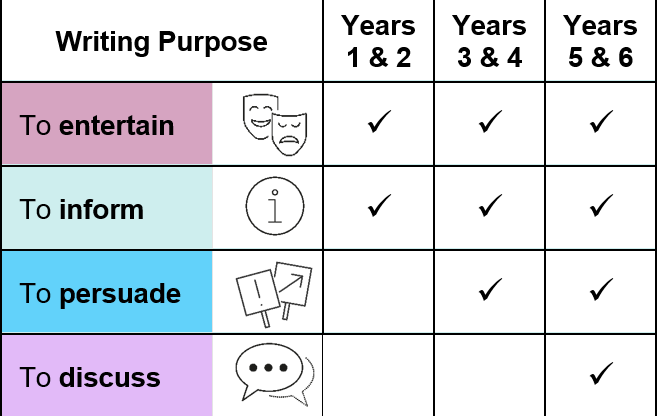
Genre Progression of Skills
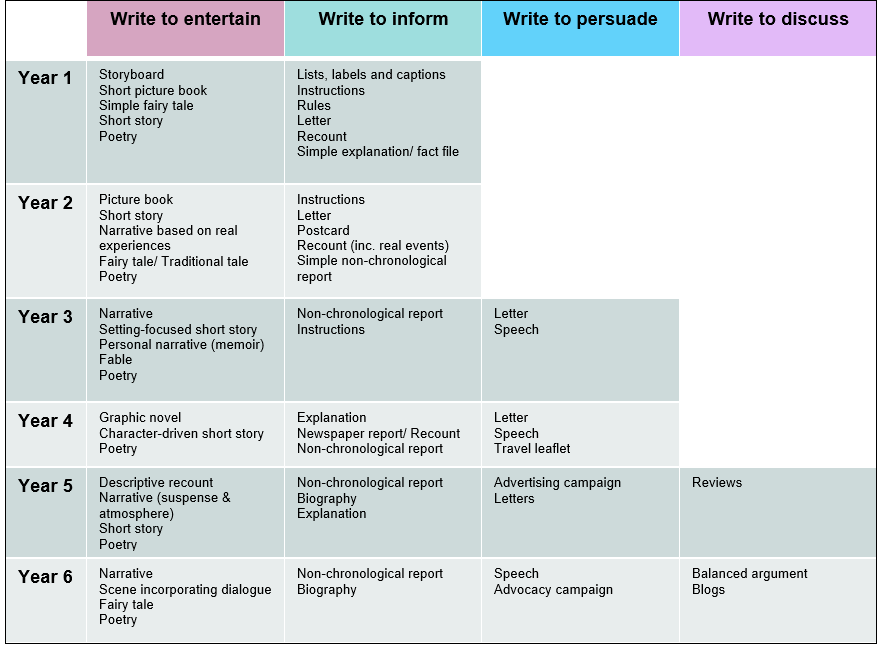
Follow this link to access the statutory content of the English objectives within the National Curriculum: English programmes of study: key stages 1 and 2 (publishing.service.gov.uk). The information below outlines our approach to the teaching of writing in each year group, which encompasses the teaching of the statutory content as outlined within the National Curriculum for writing for key stage one (Year 1 – Year 2), lower key stage two (Year 3 – 4) and upper key stage two (Year 5 – Year 6). For this academic year, ESSENTIALWRITING is implemented in Y1 – Y6 but builds on the foundational learning from the EYFS.
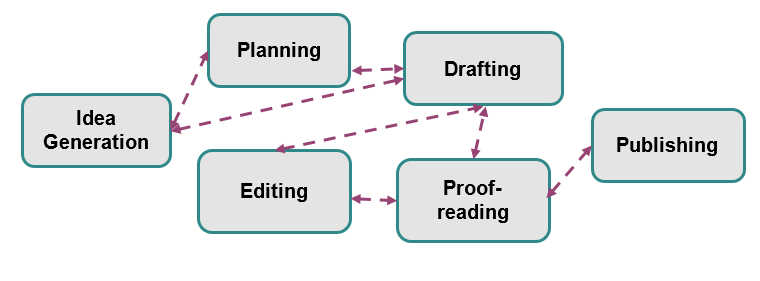
The writing process
Key Stage One
In ESSENTIALWRITING lessons, the stages of the writing process are given dedicated teaching time to enable all children to behave as writers. They learn about these vital stages of writing and, within key stage one, they are given time to collect their ideas, plan and compose their writing orally before writing. They are given regular opportunities to share their writing by reading and rereading it aloud. Children regularly discuss what they have written with their teacher and their peers to ensure their meaning is clear. They are taught to proof-read to make corrections in spelling, grammar and punctuation so that their readers can follow their writing with clarity. Vitally, within all writing units, the children are given time to publish their writing to share it and celebrate their success with their intended audience.
Lower Key Stage Two
In lower key stage two, the children continue to discuss and record their ideas for writing and ‘read as writers’ to study writerly craft and apply similar techniques to their own writing. Oral rehearsal for writing is embedded throughout the writing teaching sequence and the children build a varied and rich vocabulary and increasing range of sentence structures to use within their compositions. Dedicated time is provided to teach the children how to evaluate and edit their writing, thinking carefully about their language choices and the intended effect on the reader. Proof-reading strategies are used to check for spelling and punctuation errors to ensure that their final versions are ready to be shared with their audience.
Upper Key Stage Two
In upper key stage two, a keen focus on the authentic purpose and audience for their writing ensures that the children are acutely aware of an appropriate selection of vocabulary and grammar, with conscious control of sentence structure. The children have time to study the writerly craft of a range of authors, noting and developing their own ideas to develop independence in writing. They understand how their language choices can be used to change and enhance meaning for their intended audience. Children are successful at evaluating and editing their writing and can propose changes to their own and others’ writing, based on its effectiveness and the needs of the reader. They can proof-read for spelling and punctuation errors to ensure that their writing is ready for sharing with their chosen audience. All writing is shared and celebrated, with feedback sought from their readers to recognise how they have been successful writers and what they could do to improve even further.
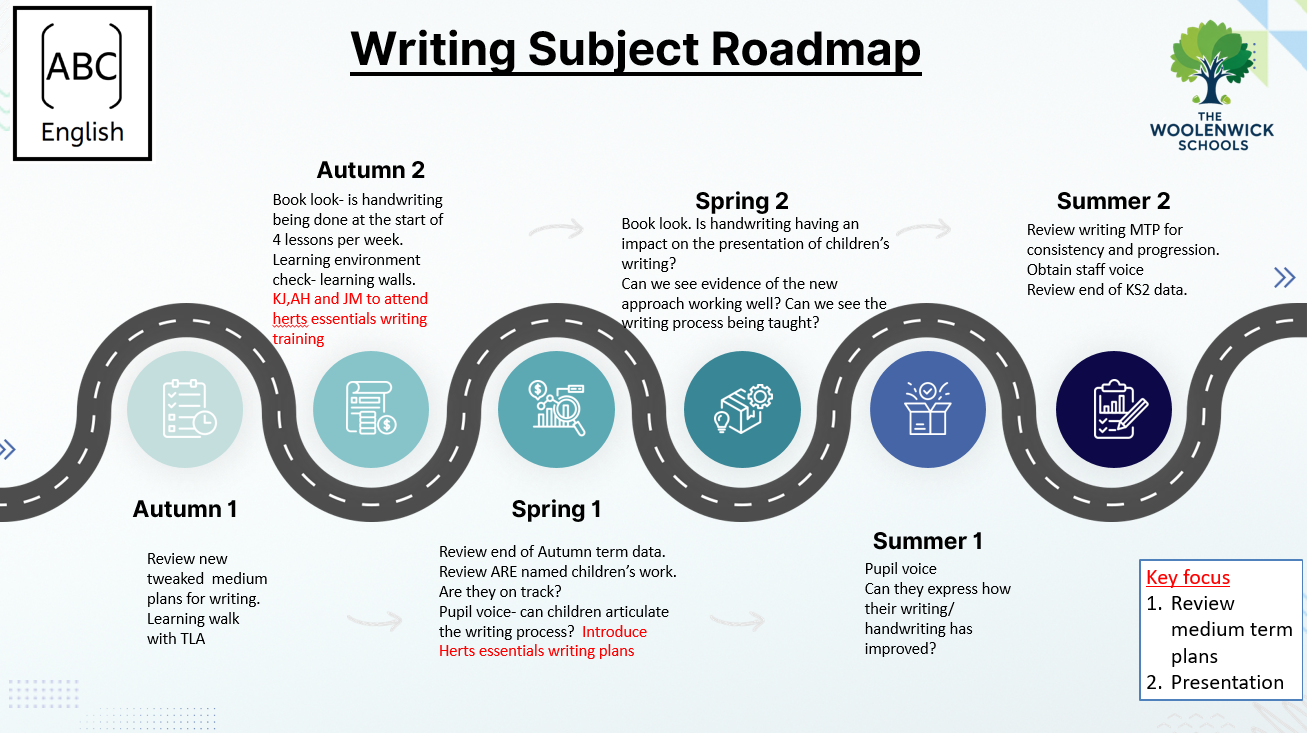
Our vision 2026-27
Useful Links and Documents
Progression of skills Year 1-6